True Detective is prestige pulp; we all know that. Like the Alan Moore comics that inspired him, Nic Pizzolato pairs the unserious with literary aims and structures. It works.
His season arcs end redemptively, with his hard-boiled men (they’d be funny if they weren’t so well-acted) finding their soft spot and sticking with it, for however much time they have left. The way they speak around women isn’t just awkwardly written, it’s awkward per se, it’s the Tracker searching desperately for the resolve to exit the jungle.
Let’s hash this out, because we love cliché and we love taking it apart and putting it back together.
Dead boy, missing girl. He’s on their tracks, and it’s on him to avenge them. He’s known as a tracker from the time he hunted people in the jungle.
The Tracker, therefore, never left the jungle. Still reading tracks, still searching for leads. The Tracker’s in the jungle looking for a Girl, and that’s all he knows to do. He’s unlikely to stop even if they won’t him too.
It can be argued he’s been put in this spot trying to please Ma, but it’s irrelevant. He must continue, alone if necessary. In truth, perhaps preferably. Meanwhile the outlines of his wife and family in his rearview mirror are framed by noirish lamplight. Now ten years have passed: Isn’t this where I came in? Is the whole of time a vicious jungle?
Naturally, the wife tells it best:
AMELIA: I don’t think you realize this, Wayne, you could have been good at just about anything. But what you think you are, it made you stuck.
TRACKER: I never went to college. Or California. I listened to my Ma. I was in the army, and then PD. Maybe I… got too good at doin’ what I was told.
AMELIA: I always think about why you said you joined the army.
TRACKER: Didn’t have money for school, or no job…
AMELIA: No, you told me… you said you figured that if you died… that your mom would be rich, because the government would give her $10,000, and that’s why you ended up joining.
TRACKER: Uh… I think we both… we want somethin’, we get real single-minded.
“Doing what I’m told”. As if the master is always some cantankerous drill-sergeant. Wayne’s master is the Tracker, who sets him on a circuitous path of guilt-ridden duty to the self. Amelia doesn’t ask him to bury his career; the Tracker does. Amelia just takes the blame.
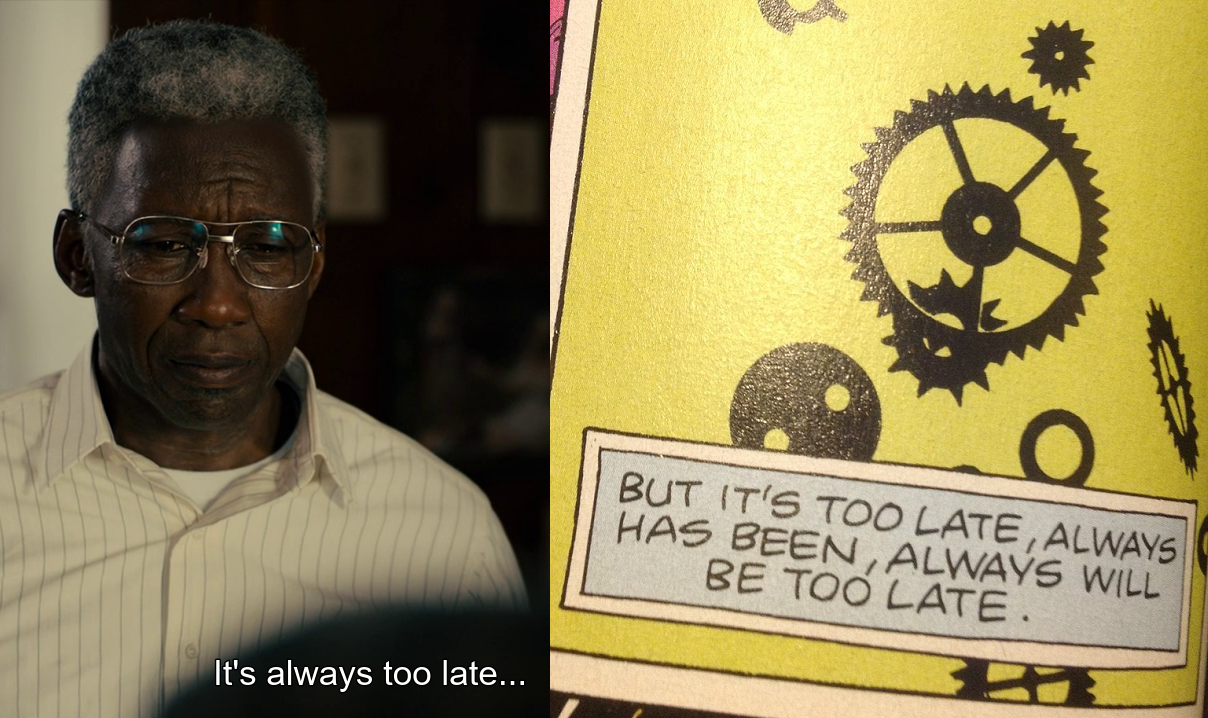
Now he’s an old man: fresh tracks carry the promise of one last salvific tour through the jungle, though his failing memory degrades the lived time that’s raw material to the detective’s storytelling mind. We are machines who eat time, consumed by the obsessions of its labyrinths, layering memoirs with yellow notes and highlighter, looking for stories. If we’re chasing the shadow of a Girl, it’s only because we’re driven by a bogus promise; by the master promising a piece of thread that leads outside the maze. But the exit signs are glowing green.
That’s the show’s heart, always has been, and if it feels like it’s always finding a footing around race and gender, that’s very much the point. The show is a self-conscious white boy, trying to get better at being around others.
There’s obviously much more to say, from the season declaring a franchise universe just to bury it and the expectation of a pyramidal conspiracy (a master story), to the impositions built into the writer’s job and our vicarious and self-reflexive relationship to crime, to the accents of ghost story and Ali’s apprehensive fourth wall graze of a look that concludes the thing. The fear he can’t hide, the silent accusation.
Did you confuse reacting with feeling? Did you mistake compulsion for freedom? And even so… did you harden your heart against what loved you most?
In the end, oblivion is a kind of penance. Having abandoned the track, he is reprieved of the monomania and the weight of the dead. He looks around and all he can see is a mother and a daughter, who might just about feel familiar, but the thing is that they’re there, flesh and blood, not shadows. As enigmatic as anything that signifies nothing but its own presence. All that is there is them, and a cool glass of water.
Back to the house now. The son stows the final lead in his pocket, just in case. The partner, who once tortured suspects for leads, also shows up. On his lap is a small dog.
The children, a boy and a girl, riding off in little bicycles.
Timelines cascade and collapse in the Tracker’s geriatric mind, and he goes back to the day he told her he’ll marry her, and from there to the jungle, always the jungle.