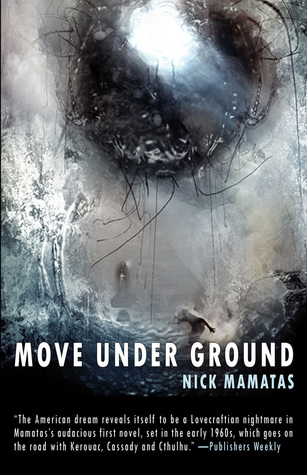
Mamatas kick-started his career with this rollicking road-trip adventure mashing the Beats with the Cthulhu Mythos. Far from foreign bodies, as he shows, these two entities share dark links, both navigating existential voids and the lure of enlightenment on broadly individualist terms. Among the book’s most confident chapters are in the beginning, where Jack is in Big Sur mode: woven into his ecstatic Western Buddhist stream-of-consciousness are intimations of the horrors that await him. Here, the spirit elevates only for Cthulhu’s face-tentacles to give it a slimy caress.
The book’s Kerouac impression is spot-on and clearly takes center stage, even when it’s not warped into the fantastical or the intertextual. Indeed, at times I felt an embarrassed desire for a version of it with all the horror taken out, leaving just riffs on Big Sur and On The Road. Further on, turns of the adventure left me cold or even went over my head. The balance between comedy and horror, carefully scaffolded in the first part, is eventually dropped for an ever-grimmer dystopia, which took me from fascinated to kind of bummed out. Don’t get me wrong, it’s worth it: Mamatas lavishes us with visionary imagery of an American nightmare turned inside out and tentacular.
This take on the Mythos, then, is hardly without a statement, as this take on Kerouac is hardly a hagiography. Mamatas is not shy about the Beat’s quest leading him to dead-ends, or for that matter, his homophobia, his latent hawkishness, his string of discarded women and lives carelessly meddled with. It’s not unusual (anymore) to raise such issues with his unfortunately dated material, but Mamatas extends his critique to present road-trip enlightenment not as an escape from tentacular capitalism but an excrescence thereof. In its climax, the book defines the dilemma as “wanting Nothingness versus wanting nothing”. Both sanctified diesel-powered bums like Dean Moriarty and his insectoid accountant acolytes eventually side with the former.
Yet, Mamatas does love his hero enough to redeem him, if only to reward him with the bitter slump of real Kerouac’s old age. The book ends on the truest of cliches: the species’ propensity for self-destruction. Jack looks on as the Cold War escalates and comprehends nothing, not even picking the right side. Yet he understands his adventure to have been nothing but another story of humans gleefully dancing off the cliff.
Standout scene: Dean Moriarty’s wedding / banquet / interspecies orgy.
 the Budafoki amended